Why Gen Z Is Living Inside a Shoujo Manga (And Honestly, We Get It)
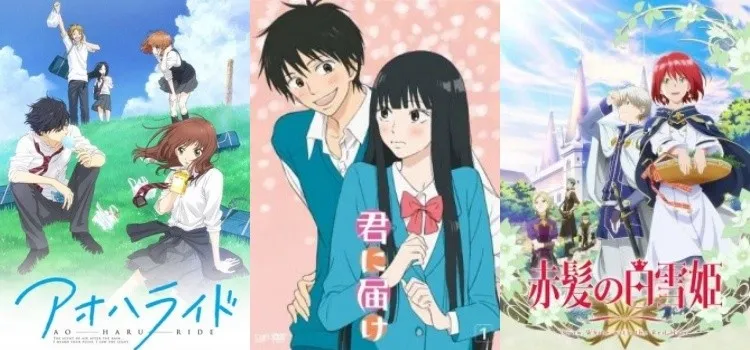
Photo: shoujo manga books colorful romance illustration young woman reading, via cdn.skdesu.com
Scroll through TikTok for about fifteen minutes and you'll start noticing something. Someone describes their situationship using the phrase "he's so tsundere about it." A girl posts a POV video captioned "the childhood friend who moved away just texted me." A guy stitches a confession video with the audio from an anime and the caption reads "this is literally what happened."
This isn't a coincidence. It's a cultural shift — and shoujo manga is at the center of it.
For the uninitiated: shoujo is a manga demographic category aimed at young women, and it's the genre responsible for some of the most emotionally complex, trope-rich romance storytelling ever committed to paper. Think Fruits Basket, Kimi ni Todoke, Ao Haru Ride, Ouran High School Host Club. These aren't just beloved comics — they're essentially instruction manuals for a certain kind of romantic feeling. And Gen Z Americans, it turns out, have been reading them closely.
The Trope Breakdown: What Shoujo Actually Invented
Before we get into the TikTok pipeline, let's give credit where it's due. Shoujo manga didn't just popularize certain romance tropes — it codified them, gave them names, and built entire narrative architectures around them. Here are the big ones that keep showing up in Gen Z's online vocabulary:
The Tsundere. Cold on the outside, warm on the inside, absolutely allergic to admitting feelings. This archetype is so embedded in internet culture at this point that people use the word in everyday English conversation without blinking. "He's giving tsundere energy" is a sentence that makes complete sense to anyone under 25 in the US right now.
The Slow Burn / Oblivious Lead. The protagonist who is somehow the last person in the entire school to realize that their best friend is completely in love with them. This trope is everywhere on TikTok — videos about "signs your friend likes you that you definitely ignored" are essentially just shoujo manga recaps with a different font.
The Dramatic Confession Scene. Shoujo manga understood that the confession — not the first date, not the kiss, but the raw, terrifying moment of saying "I like you" — is the emotional climax of a romance. This maps almost perfectly onto how Gen Z talks about dating milestones online. The confession is the event. Everything else is aftermath.
The Childhood Friend / Reconnection Arc. Two people who shared something important when they were young, separated by time or distance, and then thrown back together. This one has practically become its own TikTok subgenre — videos about running into old crushes, reconnecting with childhood friends, and the specific emotional texture of "someone who knew you before you became who you are."
The Festival / Cherry Blossom Moment. Shoujo manga has always understood the power of setting — the school rooftop, the summer festival, the moment under falling cherry blossoms. Gen Z has translated this into an obsession with "main character moments" and aesthetic romantic settings that feel lifted directly from manga panels.
Why Does This Hit Harder Than Western Rom-Coms?
This is the real question, and it's worth sitting with for a second. Hollywood has been making romantic comedies for a century. Why are American teenagers reaching for Japanese manga as their emotional reference point instead?
A few honest answers:
Western rom-coms got cynical. Somewhere along the way, the genre started winking at itself too hard. The meet-cute became ironic. The grand gesture became something to be deconstructed. Gen Z didn't grow up with Sleepless in Seattle as a sincere cultural artifact — they grew up with takes about how Sleepless in Seattle is actually kind of creepy. Shoujo manga, by contrast, plays it completely straight. It believes in the feeling. It doesn't apologize for caring this much.
Shoujo centers emotional interiority. One of the defining features of the genre is the internal monologue — pages of a character processing their own feelings, second-guessing themselves, replaying a conversation. This is extremely online behavior, essentially. Gen Z grew up articulating internal states publicly, and shoujo manga treats that kind of emotional processing as the main event rather than a distraction from the plot.
The pacing is different. A shoujo romance might spend fifteen volumes on the lead-up to a first kiss. The tension is the point. In an era of instant everything, there's something almost countercultural about a love story that takes its time — and Gen Z, despite the stereotype, seems to genuinely respond to it.
The TikTok Translation in Action
The crossover isn't just theoretical. Specific shoujo titles have gone viral on TikTok in ways that introduced them to audiences who'd never read a manga page in their lives. Fruits Basket became a genuine emotional event when the 2019 remake aired — TikTok was full of reaction videos, crying compilations, and "I wasn't ready for this" posts from American viewers who stumbled into it cold. Kimi ni Todoke got a live-action Netflix adaptation in 2023 that performed well enough with Western audiences to get a sequel season. Horimiya generated TikTok discourse about relationship dynamics that had nothing to do with anime fandom — people were using it to talk about their own situationships.
The "BookTok" community, which has enormous influence over what young Americans read, has also started bleeding into manga recommendations. Shoujo titles now appear regularly alongside contemporary YA fiction in "if you liked this, try this" content — a crossover that would have seemed unlikely even five years ago.
The Bigger Picture
What's happening here isn't really about manga specifically — it's about Gen Z finding an emotional language that fits. Western pop culture has historically been pretty bad at depicting the specific, almost unbearable intensity of teenage romantic feelings without either mocking them or sensationalizing them. Shoujo manga takes those feelings completely seriously. It treats a first crush like it matters as much as it actually does when you're sixteen.
And maybe that's the simplest answer to why these tropes have traveled so far from their origins. Good emotional storytelling doesn't need a passport. When something captures a feeling accurately — the specific agony of liking someone who doesn't know, the terrifying vulnerability of a confession, the way a single small gesture can completely rearrange your understanding of a relationship — it lands regardless of where it came from.
Shoujo manga figured that out decades ago. Gen Z just found it. And honestly? Welcome to the club.