Spending Real Money on Fictional Love: Inside the Waifu Economy Quietly Exploding Across America
Let's get one thing straight before we go any further: there is nothing wrong with loving a fictional character. Anime fans have been doing it for decades, and honestly, some of these characters are written with more depth and consistency than most real people you'll meet at a networking event. But something has shifted in recent years — shifted hard — and the numbers are starting to tell a story that even casual fans can't ignore.
American anime enthusiasts are spending thousands of dollars annually on characters who exist entirely in the realm of pixels and ink. And the companies behind those characters? They're not just okay with it. They're engineering it.
The Numbers Don't Lie
The global anime merchandise market was valued at over $28 billion in 2023, and a significant chunk of that money flows straight out of the United States. But raw market figures don't capture what's actually happening at the individual level.
Take Marcus, a 27-year-old software developer from Austin, Texas, who asked us not to use his last name. He estimates he's spent close to $4,000 in the past two years on merchandise, figures, and in-game purchases related to a single character from a popular gacha game tied to a major anime franchise. "It doesn't feel like spending money on a thing," he told us. "It feels like... supporting her? Like she matters and I want to show that."
That language — she matters — is not accidental. It's the entire product.
Dating simulation games, or "dating sims," have exploded in the US market. Titles like Obey Me!, Mystic Messenger, and the various Fate/Grand Order story arcs have built multi-million dollar revenue streams almost entirely on emotional investment. The mechanics vary, but the formula is consistent: build a relationship with a character over time, and then monetize the moments where players want to go deeper. Limited-time story events. Exclusive voice lines. Costumes that feel like gifts you're giving someone you care about.
Loneliness Is a Product Feature, Not a Bug
Here's where it gets a little uncomfortable to talk about, but we're going to talk about it anyway.
The psychological engine behind parasocial relationships — the one-sided emotional bonds we form with characters, celebrities, or streamers — is well-documented. Humans are wired for connection, and when real-world social needs go unmet, the brain doesn't just shut that circuitry off. It redirects. Fictional characters, especially ones crafted with meticulous attention to personality, voice, and visual appeal, can trigger genuine feelings of warmth, protectiveness, and attachment.
Dr. Jamie Rios, a consumer psychologist based in Chicago who studies entertainment spending patterns, put it bluntly in a conversation with us: "These products are not selling you a character. They're selling you a relationship experience. The character is the vessel. The loneliness — or the desire for connection — is the fuel."
Anime studios and merchandise licensors have gotten exceptionally good at feeding that fuel. Limited-edition birthday merchandise for fictional characters. "Anniversary" events in mobile games. Voice actress performances designed to simulate intimate conversation. Entire product lines built around the fantasy of a character acknowledging you specifically.
It's not manipulation in a vacuum — fans often engage with this stuff knowingly and joyfully. But understanding the mechanism matters, especially when the price tags keep climbing.
The Merch Pipeline Is a Machine
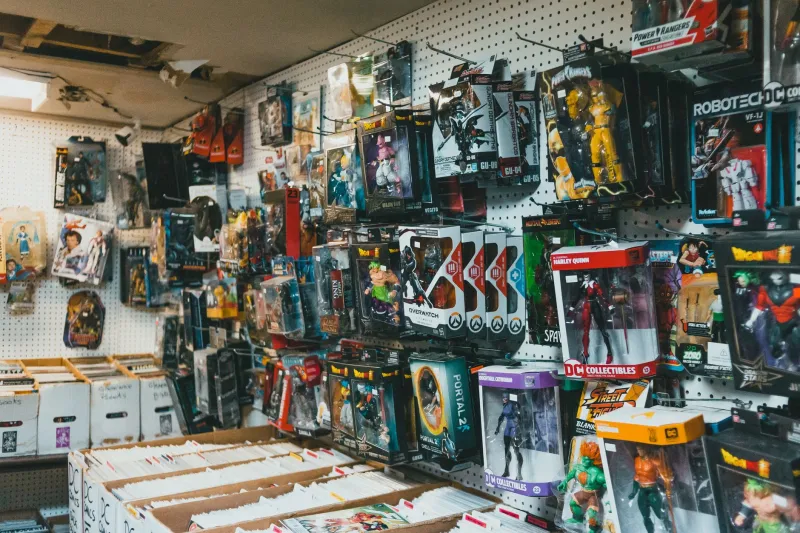
Walk through any major anime convention in the US — Anime Expo, Otakon, Crunchyroll Expo — and you'll see the waifu economy operating in real time. Figures ranging from $30 to $400. Body pillows. Art books. Acrylic standees. Exclusive collab items that will never be restocked. The scarcity is intentional. The emotional stakes are baked in.
Bandai Namco, Aniplex, Good Smile Company — these are not companies stumbling into emotional marketing by accident. Good Smile's Nendoroid and Scale Figure lines are specifically designed around character attachment. The company releases figures tied to cultural moments in a show's run, timing drops to coincide with peak emotional investment from the fanbase. It's sophisticated, and it works.
Sarah, a 31-year-old teacher from Portland, describes her figure collection as "a physical record of characters who got me through hard times." She's spent roughly $2,500 on figures over five years. "When I was going through a really rough patch, I was watching a lot of anime. Those characters were there for me in a real way. Having their figures on my shelf feels like honoring that."
That's a genuine emotional truth. It's also exactly what the marketing teams are counting on.
Is Any of This a Problem?
Here's the honest answer: it depends entirely on the individual, and it's not Beppin News's place to tell adults how to spend their money or structure their emotional lives. Fandom has always involved deep attachment. People cried over characters in novels long before anime existed.
But there's a version of this that deserves scrutiny — particularly the gacha game model, which uses randomized reward mechanics that mirror slot machine psychology to extract money from players chasing a specific character card or costume. The predatory end of the waifu economy isn't the figure collector who saves up for a grail piece. It's the person spending $200 in a single night on a banner pull, chasing a digital image of a character they feel emotionally obligated to "get."
Several US states have begun examining loot box and gacha mechanics under gambling frameworks, and advocates for digital consumer protection have specifically flagged the emotional targeting of lonely or socially isolated players as an area needing regulatory attention.
The Takeaway
The waifu economy is real, it's growing, and it's not going anywhere. American fans are spending more than ever on emotional connections to fictional characters, and the industry has built an entire infrastructure to meet — and amplify — that demand.
There's beauty in it, genuinely. The love fans have for these characters is real, even if the characters aren't. But it's worth knowing, clearly and honestly, that the thing you're feeling? Someone built a revenue model around it. Whether that changes how you spend is up to you.