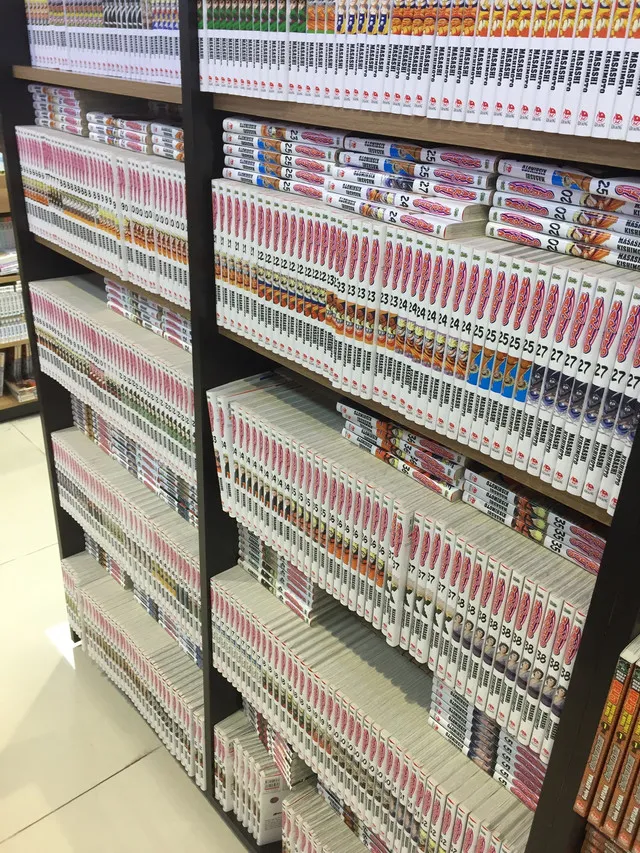
Empty Shelves, Full Wishlists: The Quiet Crisis Hitting Manga Fans at the Checkout Counter
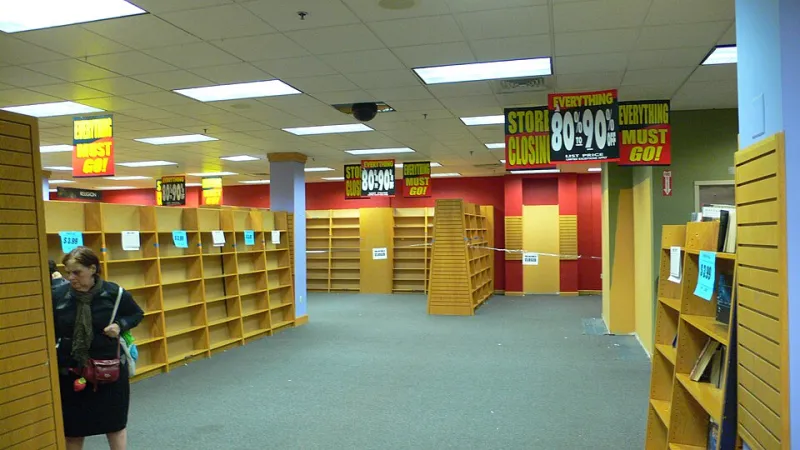
Photo: Skyfaller, CC BY-SA 4.0, via Wikimedia Commons
You finally track down volume 7 of that series you've been obsessing over. You drive to your local bookstore. You find the shelf. And there it is — a gap where your book should be, flanked by a sad little "coming soon" tag that offers zero comfort. If this sounds familiar, welcome to what's quietly becoming one of the most frustrating realities for manga readers across the United States right now.
The manga boom in America has been nothing short of spectacular over the past several years. Sales records shattered. Mainstream retailers stocking entire dedicated sections. Publishers scrambling to license titles faster than ever. But underneath all that growth, something's been quietly cracking — and the cracks are now showing up as empty shelves in stores from Portland to Miami.
It Starts Way Before the Bookstore
To understand why your local shop can't keep manga stocked, you have to trace the problem back several steps. Most manga sold in the US is printed overseas — primarily in Canada and increasingly in parts of Asia — because domestic print infrastructure simply isn't scaled to handle the volume. That means every physical volume you buy has already survived an international journey before it ever hits a shelf.
When global shipping costs spiked and container availability tightened in the post-pandemic years, publishers absorbed the hits quietly for a while. But those pressures didn't fully evaporate — they evolved. Printing facilities that ramped down during COVID slowdowns haven't all returned to full capacity. Paper costs remain elevated. And the sheer demand for manga — which kept climbing even as supply chains wheezed — created a backlog that publishers are still working through.
The result? Print runs that can't keep pace with reader appetite, and release schedules that slip without much public fanfare.
Publisher Allocation: The Invisible Hand Deciding What Your Store Gets
Here's the part that doesn't get talked about enough: even when copies exist, they don't always end up where fans can find them. Publishers and distributors make allocation decisions that prioritize certain retail partners — typically the largest chains and online giants — over independent bookstores and smaller regional retailers.
For a mom-and-pop comic shop in a mid-sized city, this can mean receiving a fraction of what they ordered, or getting stock weeks after Amazon has already fulfilled pre-orders. The independent retailer ends up with frustrated customers and a shelf that looks like it lost an argument.
Fans who've been loyal to local shops are getting caught in the middle of a distribution system that was never really designed to handle manga at this scale of mainstream popularity. What worked fine when manga was a niche hobby is straining hard under the weight of a genuine mass-market phenomenon.
The Digital Pivot Nobody Asked For (But Everyone's Making)
Predictably, scarcity is accelerating a behavioral shift that publishers probably would have preferred to happen more gradually. Readers who can't find physical copies are migrating to digital platforms — Viz Media's app, Manga Plus, Azuki, Comixology — and a significant chunk of them aren't coming back to print.
For publishers, that's a complicated win. Digital sales carry better margins and no shipping headaches. But the physical manga market has always driven discovery, gifting, and the kind of casual browsing that turns a curious newcomer into a lifelong collector. Losing shelf presence isn't just a logistical inconvenience — it's a marketing problem.
There's also the international retailer angle. American fans, particularly those deep in the hobby, have long known about importers like CDJapan and Amazon Japan. The shortage is pushing a new wave of readers toward these options, particularly for series where the English release is lagging badly behind the Japanese one anyway. It's a workaround, but it's one that routes money away from the domestic publishing ecosystem entirely.
What Fans Are Actually Doing About It
The manga community, being the resourceful and extremely online group that it is, has adapted in characteristically creative ways. Discord servers and subreddits dedicated to specific series have become informal stock-alert networks, with members posting whenever a volume pops back into inventory somewhere. Some fans are pre-ordering multiple volumes at once from different retailers as a hedge. Others have given up on single-volume collecting entirely and are waiting for box sets, which tend to be prioritized differently in distribution.
Local libraries are also having a moment. Circulation numbers for manga have jumped at public libraries in cities across the country, partly because fans who can't buy are borrowing instead. It's great for literacy statistics and terrible for the retailers who need those sales.
Is There a Fix Coming?
Publishers are aware of the problem — they're just not talking about it loudly, because there's no clean solution to announce. Some are quietly expanding their print-on-demand capabilities for backlist titles, which helps with older volumes but does nothing for new releases. A few have started being more transparent about release delays, which fans appreciate even if it doesn't solve anything.
The longer-term picture hinges on whether domestic printing capacity grows to meet demand, and whether distribution infrastructure evolves to serve a market where manga is genuinely mainstream rather than specialty. Neither of those things happens quickly or cheaply.
In the meantime, the fans who built this boom — the ones who showed up to conventions, filled out reader surveys, and evangelized their favorite series to anyone who'd listen — are the ones left refreshing product pages and haunting the new arrivals section hoping today's the day their volume finally shows up.
The Bigger Picture
Manga's explosion in America is a genuine cultural success story, and it's easy to celebrate the numbers without examining the infrastructure holding everything up. Right now, that infrastructure is showing real stress fractures. The shortage isn't catastrophic — it's not going to kill the medium's momentum — but it is a signal that the industry's growth has outpaced its logistics in ways that need serious attention.
For readers, the most honest advice is also the most annoying: pre-order early, consider digital as a complement to physical collecting, and maybe make friends with your local librarian. The shelves will get restocked eventually. It just might take longer than any of us would like.