The Shonen Section at Your Local Library Is Bigger Than the Classics Now — And Librarians Couldn't Be Happier
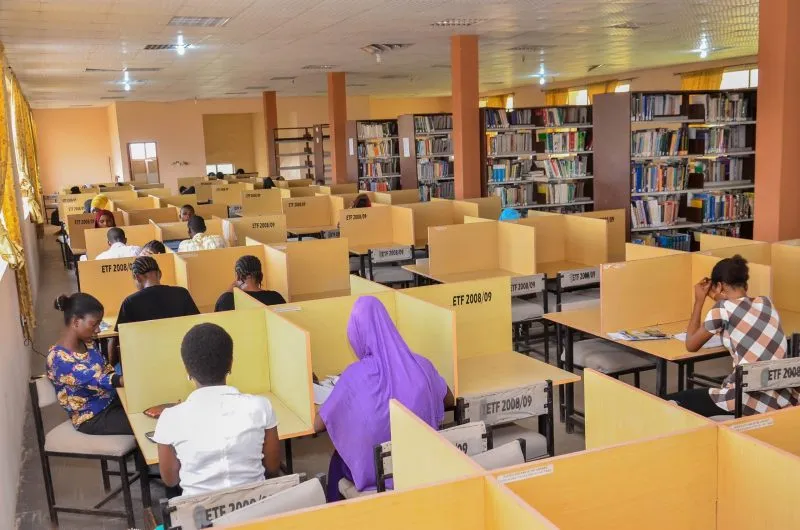
Photo: Ktrogunsola, CC0, via Wikimedia Commons
Walk into a well-run school library these days and look for the most battered, most requested, most dog-eared section. Odds are it's the manga shelves — and odds are they're empty, because everything's checked out.
American educators have stopped treating manga as a fad to wait out. It's now a load-bearing pillar of youth reading, and the people who run libraries and classrooms have the circulation data to prove it.
Librarians Are Buying What Kids Actually Read
Public and school librarians report that manga titles dominate circulation statistics year after year, often outselling and out-borrowing traditional YA novels several times over. The smart ones responded by expanding collections, adding manga-specific shelving, and learning the difference between shonen, shojo, and seinen — because nothing kills a kid's trust faster than a librarian who hands a fifth-grader a series meant for adults.
That last part has become a genuine professional skill. Age-appropriateness debates over manga have sparked budget battles and policy arguments in school districts across the country, and librarians increasingly find themselves as the gatekeepers — reading ahead, labeling shelves, and defending their choices at school board meetings.
Teachers Are In On It Too
In classrooms, manga has become the sneakiest reading intervention available. Teachers of struggling and reluctant readers report that graphic-novel formats lower the intimidation barrier of dense text pages, building confidence and vocabulary along the way. Some educators use manga adaptations of classics; others build whole units around visual storytelling and panel analysis.
Meanwhile, after-school anime clubs have quietly replaced chess club as the default hangout for a certain kind of kid. Club rosters that used to number eight now run to forty, complete with screening schedules, cosplay days, and merch trading networks that operate with the efficiency of a small import business.
The Generational Handoff
The reason for all this institutional embrace is simple: the teachers and librarians entering the workforce now grew up on Naruto and Death Note themselves. They're not translating a foreign culture — they're extending their own.
The ripple effects are already visible. Kids who got hooked on manga at twelve are becoming the teen volunteers who run library events, the college students studying Japanese, and eventually the adult readers keeping the American manga market the healthiest it's been in decades.
There will still be fights — there always are when a new medium wins over the kids. But the direction is set. The next decade of American fandom is currently sitting in a homeroom, reading volume fourteen under the desk, and nobody's stopping them anymore.