The Invisible Shelf: Why Thousands of Great Manga Titles Never Make It to America

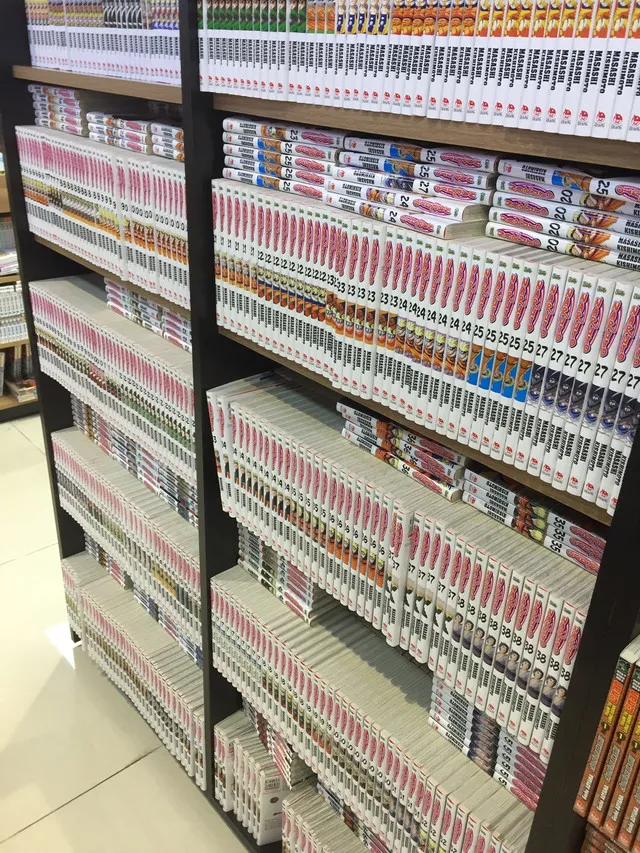
Spend ten minutes browsing manga at a major US retailer and the selection starts to feel like it was curated by an algorithm with strong opinions. The mega-franchises are everywhere — One Piece, Naruto, My Hero Academia — stacked high and priced to move. Then, tucked into a smaller corner, you'll usually find a handful of artsy, critically acclaimed titles that got picked up by a boutique publisher chasing prestige. Everything in between? Good luck.
That middle ground — the solid, sometimes-beloved, commercially viable-but-not-blockbuster manga that dominates Japanese shelves — is almost entirely absent from the American market. And the reasons why reveal something deeply structural about how US manga publishing actually works.
The Barbell Problem
Inside publishing circles, this is sometimes called the "barbell" market: weight on both ends, almost nothing in the middle. On one side, you have the guaranteed sellers — titles with anime adaptations, massive social media followings, and brand recognition that sells itself. On the other, you have niche prestige titles that publishers take a calculated risk on, betting that critical attention and a devoted small audience will justify the investment.
What gets squeezed out is everything in between. A thriller manga that ran for eight volumes and sold respectably in Japan. A romance series with a dedicated readership but no anime deal. A sports manga that critics loved but never broke into mainstream conversation. These titles exist by the thousands, and most American fans will never encounter them.
"The economics are brutal," says one small press publisher who asked not to be identified by name. "Licensing a mid-tier title costs real money — you're paying for translation, lettering, printing, distribution. For a blockbuster, you know the demand is there. For prestige titles, you're buying the conversation. But for the middle? You're gambling on a title that might move three thousand copies if you're lucky, and that math just doesn't work for most publishers."
The Licensing Numbers Don't Lie
To understand the scale of what's being missed, consider this: Japan publishes somewhere in the neighborhood of 15,000 manga volumes per year across all genres and demographics. The US market, in a strong year, localizes a few hundred. Even accounting for titles that genuinely wouldn't translate culturally, that's an enormous gap — and it falls disproportionately on mid-tier titles.
The big three American manga publishers — Viz Media, Kodansha USA, and Yen Press — operate at a scale that almost structurally pushes them toward blockbusters. Their distribution infrastructure, marketing budgets, and retail relationships are calibrated for volume. A title that might sell fifteen thousand copies per volume is actually a headache for a publisher geared toward moving hundreds of thousands.
Smaller publishers like Seven Seas Entertainment or Tokyopop (in its current iteration) operate differently, but they face their own constraints. Their risk tolerance is higher, but their capacity is limited. They can take chances on unconventional titles, but they're not going to license fifty mid-tier manga a year.
The Retailer Side of the Equation
The problem compounds at the retail level. Major bookstore chains allocate shelf space based on projected turnover, and manga sections are no exception. A title without an anime, without a viral TikTok moment, without some external hook that a buyer can point to? It's a tough sell.
"We'd love to carry more variety," one independent bookstore owner in the Pacific Northwest explained. "But shelf space is finite, and I have to make decisions. If I have room for ten new manga titles and I can pick between a known franchise and something that nobody's heard of, I'm going to default to what I know will move. I'm not gatekeeping — I'm just keeping the lights on."
This creates a feedback loop that's almost impossible to break through conventional means. Titles don't get licensed because retailers won't prioritize them. Retailers won't prioritize them because they don't have name recognition. They don't have name recognition because they were never licensed.
What Fans Are Actually Missing
The frustrating part is that the manga sitting in this gap isn't obscure for a reason. A lot of it is genuinely excellent. Fans who've imported titles or read scanlations (a whole separate conversation) often report that some of their favorite manga came from exactly this mid-tier space — stories that didn't need to be the biggest thing in the world to be deeply worthwhile.
Genres hit particularly hard include josei (manga aimed at adult women), seinen thrillers, and standalone or shorter-run titles that don't have the franchise infrastructure to drive licensing interest. Horror manga with limited volumes. Slice-of-life series with gorgeous art but modest sales histories. Experimental titles that push genre conventions in ways that might actually find real audiences in the US — if anyone gave them the chance.
"There's this incredible josei title I've been waiting on for years," says one manga reader based in Chicago. "It's been fully translated in fan communities, it has a real fanbase, people talk about it constantly in certain circles. But it's never been officially licensed because it doesn't fit the profile publishers are looking for. It's not prestige enough to be a boutique pick and not popular enough to be a sure thing."
Is Digital the Answer?
Some publishers are experimenting with digital-first models as a way to test mid-tier titles without the overhead of print runs. Platforms like Manga Plus, Azuki, and even Kindle Unlimited have opened up some space for titles that wouldn't survive a traditional print release. But digital discovery is its own challenge — without algorithmic support or marketing spend, mid-tier titles can get lost in a catalog just as easily as they get lost on a physical shelf.
The most honest answer is probably that there's no single fix. The barbell problem is structural, and solving it would require changes at multiple points in the supply chain simultaneously — licensing costs, retail shelf allocation, marketing investment, and consumer discovery all need to shift together.
Until then, thousands of manga that could find real, enthusiastic American audiences will keep sitting on Japanese shelves, waiting for a licensing deal that economics says probably won't come. And American fans will keep browsing the same barbell, wondering why the selection never seems to change.